Marketing performance compounds when done in sequence—not all at once.
Most businesses want ROI yesterday. But ROI isn’t a switch, it’s a ladder. And if you skip steps, your performance stalls.
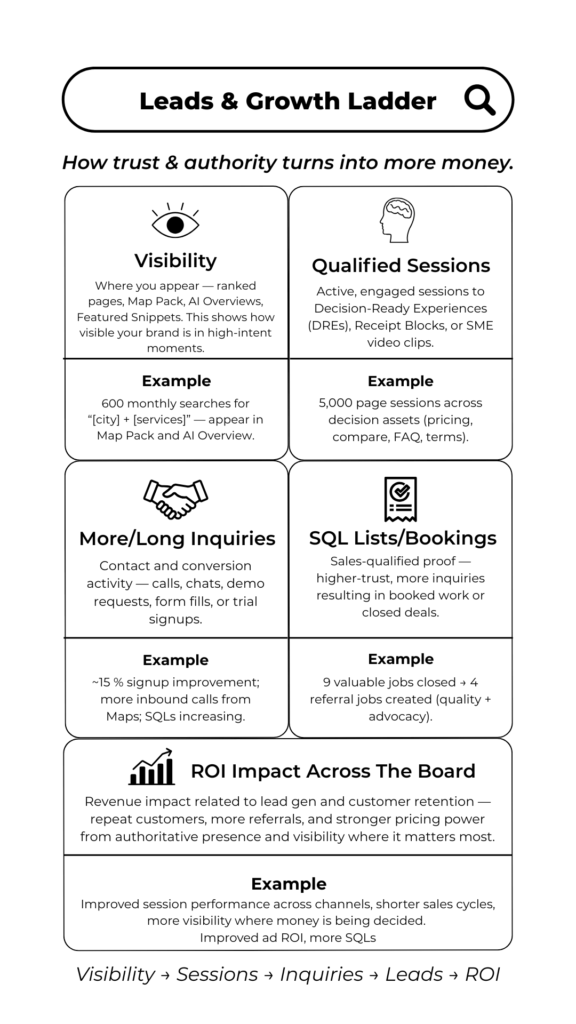
We use a step-by-step model called the Leads & Growth Ladder that shows exactly how trust and visibility become real revenue.
Start With What the Data Tells Us
According to Firework, only 36% of CMOs have a marketing measurement strategy in place, and 28% of marketers admit they don’t track ROI at all.
This isn’t a creativity problem. It’s a structural problem. You need the right objectives, the right KPIs, and a way to measure progress up the ladder.
The Ladder in Action
We don’t guess what works. We track ROI through a structured growth path:
1. Visibility: Appear in the right places: search, Maps, AI, social
2. Qualified Sessions: Engaged visits to DREs, pricing, FAQ, and service pages
3. Inquiries: Form fills, calls, trials—not just traffic
4. SQLs & Bookings: High-trust conversions that lead to pipeline
5. ROI Impact: Real revenue, better LTV, shorter sales cycles, and compounding returns
Proof You Can Track
We use:
- GA4 to monitor page/session quality and tie it to conversions
- OKRs and KPI dashboards to align with business outcomes
- Session-level clarity (not just top-funnel traffic)
And when you align your campaigns with this framework, marketing finally becomes both measurable and sustainable.
What It Looks Like in the Wild
Before Tek:
– Metrics all over the place
– Random campaign launches
– Inconsistent results
After Tek:
– Value ladder with aligned KPIs
– GA4 + CRM visibility
– Revenue tied to clear outcomes